Future of electronics: new catalytic effect discovered to produce gallium oxide
/ News
Semiconducting oxides form a new and currently highly regarded class of materials in semiconductor technology. Gallium oxide is the prototypical material in this class; with its extremely high breakdown voltage strength and optical transparency in the deep ultraviolet spectral range, it promises electronic devices that have not been achievable to date. Such devices are based on very thin and highly pure semiconductor layers produced using specialized deposition processes. Scientists at the Paul Drude Institute for Solid State Electronics (PDI) have now succeeded, for the first time, in dramatically increasing the yield of gallium oxide crystal growth through a catalytic effect. This effect is not only a new discovery; it can also be transferred to other materials with properties similar to those of gallium oxide. The results have been published in Physical Review Letters.
Physical vapor deposition (PVD) is one of the core technologies for producing thin, highly pure semiconductor layers. Molecular beam epitaxy (MBE), which was used in these investigations, is one such technique. The reaction chemistry during MBE is significantly simpler than that of other, much more complex semiconductor manufacturing technologies. The PDI researchers, therefore, did not expect a catalytic effect to occur in the MBE process. They explain this phenomenon by a new mechanism they call metal-exchange catalysis.
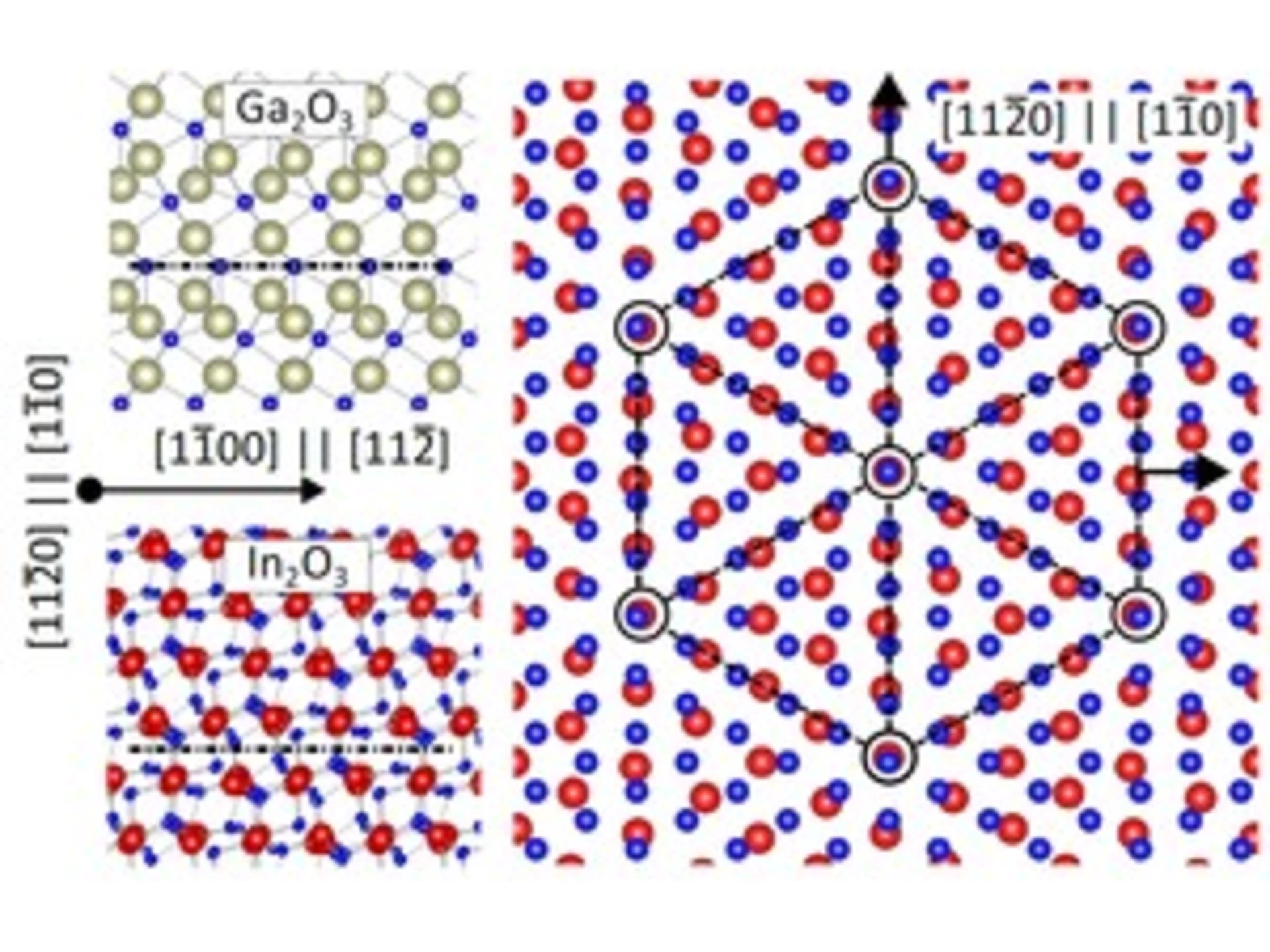
The investigations show, on the one hand, that adding the element indium increases the growth rate of gallium oxide during MBE by many times. On the other hand, in the presence of indium, gallium oxide forms even under conditions in which this would no longer be possible without this element. In doing so, the gallium oxide develops a particular crystal structure that is uniquely suited to combinations of gallium oxide and indium oxide layers in so-called heterostructures, as required in many electronic devices.
Because of the simple reaction chemistry during MBE, the researchers are convinced that the observed effect is universal and therefore applicable to all materials that exhibit properties comparable to those of gallium oxide. Dr. Patrick Vogt, PDI scientist and first author of the study, concludes: “The discovered metal-exchange catalysis provides a completely new approach to the growth of crystalline materials and very likely opens up a new pathway to previously unknown semiconductor devices.”
Patrick Vogt is an early-career researcher. Trained as a physicist, he completed his doctorate at PDI in the field of physical chemistry and semiconductor physics—as part of the Leibniz ScienceCampus GraFOx. Organized in an interdisciplinary and cooperative manner, GraFOx promotes innovative materials research, specifically on oxides, at the highest level.