Farewell to Paulo Ventura Santos
/ Announcements
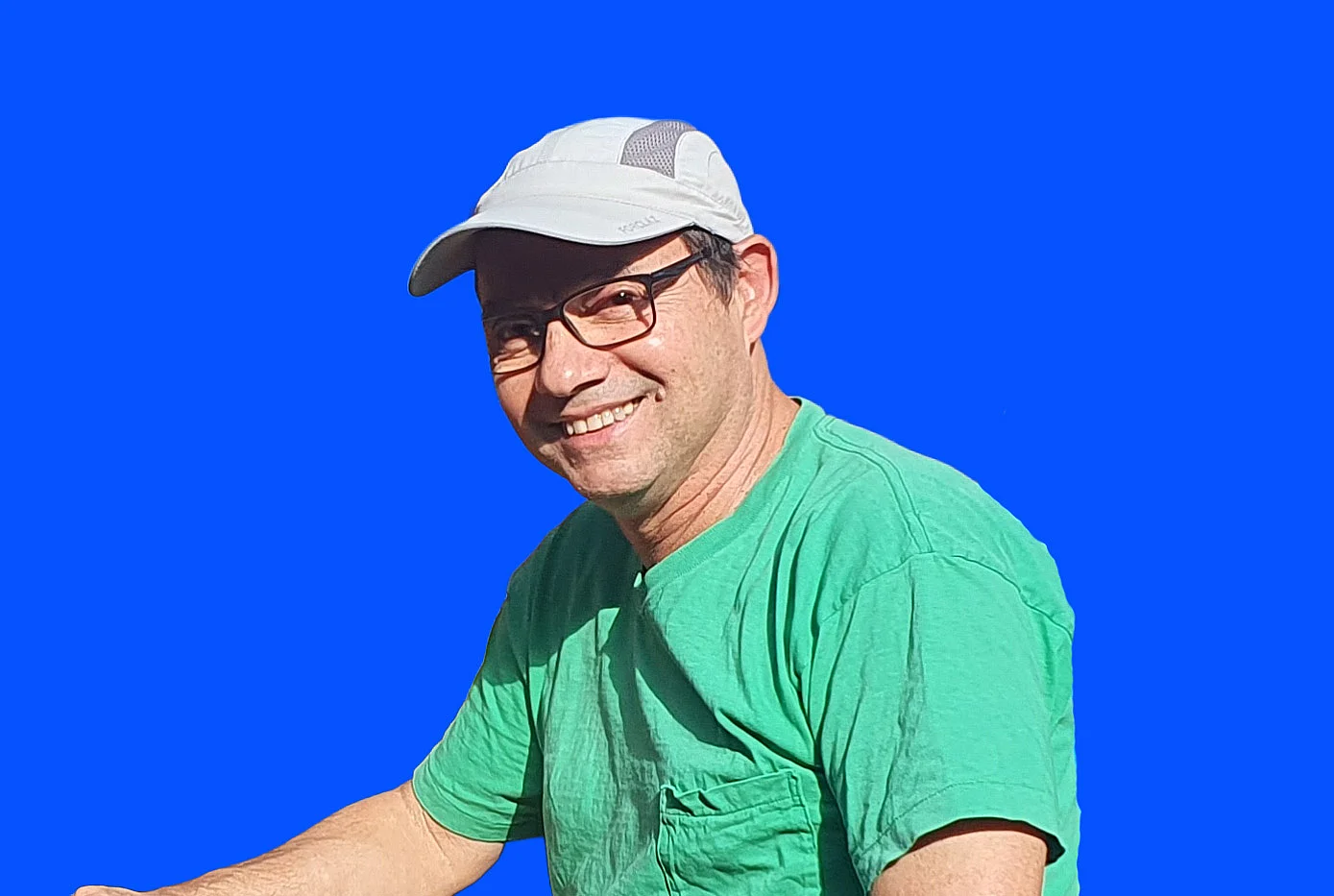
Earlier this year, Dr. Paulo Ventura Santos began his retirement after 28 years at the Paul-Drude-Institut für Festkörperelektronik (PDI). Over nearly three decades at the institute, he led the institute’s experimental research on acoustic phenomena in semiconductor and thin-film systems and guided a wide range of projects and collaborations.
Since joining PDI in November 1997, Paulo has been a constant presence in the institute’s experimental landscape. Colleagues across groups benefited from his careful approach to research, his technical knowledge, and his sustained commitment to building and maintaining high-quality experimental work.
Paulo worked primarily on surface and guided acoustic waves in semiconductor heterostructures and thin films. He established the CReA Control of Elementary Excitations by Acoustic Fields, which investigates how elastic vibrations, specifically surface acoustic waves (SAWs) and bulk acoustic waves (BAWs), can be used to influence electronic excitations at the nanoscale. This work formed part of PDI’s long-standing activities in experimental solid-state physics and acoustic spectroscopy, as demonstrated by his many publications and patents.
A notable aspect of Paulo’s career was the network of scientific collaborations he built and maintained with research institutes in Europe, Japan and the Americas. Through joint projects, visiting researcher exchanges, and co-authored publications, these collaborations strengthened PDI’s international connections and helped position its acoustic research within a broader global context.
Alongside his own research, Paulo was closely involved in the development, operation, and refinement of experimental setups for acoustic measurements. Over the years, he contributed to the continuity and evolution of laboratory capabilities, and colleagues frequently sought his advice on measurement strategies and data interpretation, particularly where precision and experimental robustness were essential.
Paulo also supported early-career researchers at PDI. Through collaboration and mentoring of students and postdoctoral researchers, he shared his experience in experimental methods and in structuring complex physical problems, contributing to a solid training environment within the institute and to the formation of the next generation of researchers in the field of acoustic spectroscopy.
Within PDI, Paulo was widely regarded as a reliable and thoughtful colleague, participating in collaborative projects that connected acoustic methods with epitaxy, materials characterization, and device-oriented research. His long tenure meant that his knowledge of experimental practice and institutional context was an important reference for many who came after him.
We thank Paulo for his contributions to the institute’s research activities and for his collegial support over the years, and we wish him all the best for the years ahead.